
How to Rank Up Fast in RIVALS Roblox: Bronze to Diamond
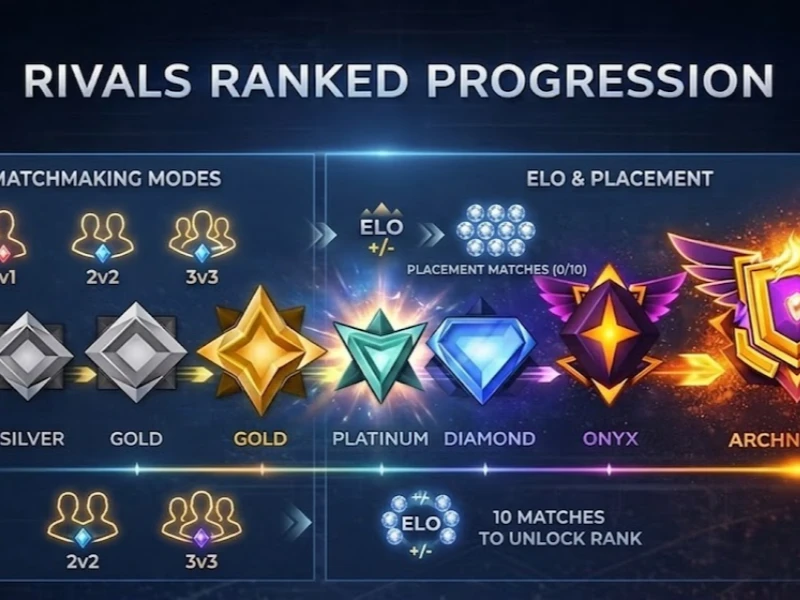
Most players stuck in Bronze or Silver aren’t stuck because of bad aim. They’re stuck because they don’t understand how the ELO system actually works, and they keep making the same three mistakes every session. I climbed from Gold to Diamond and the difference wasn’t mechanical. It was about stopping the things that bleed ELO silently.
Here’s exactly what the system rewards and how to use it.
What Is RIVALS Ranked Mode?
RIVALS ranked mode is a competitive game mode featuring 1v1, 2v2, and 3v3 matches. Players earn or lose ELO based on their match performance. To reveal their initial rank, players must first complete 10 placement matches.
The game is free on Roblox. Ranked mode has access requirements before you can queue. To play ranked, you must complete 10 standard duels (wins and losses both count), reach at least level 30, and use a Roblox account that is at least 14 days old. These requirements deter exploiters from using alternative accounts to bypass bans, while ensuring only experienced players enter competitive lobbies.
No Robux required to play ranked. Keys and weapon unlocks can help but they’re not mandatory for climbing.
The Full Rank Ladder: ELO Thresholds Explained
Rivals uses a metal-based ladder. Each rank from Bronze through Onyx has three sub-tiers (I, II, III), and above that sit Nemesis and Archnemesis.
| Rank | ELO Range | What It Actually Means |
| Bronze I to III | 0 to 599 | New players, returning players, rough placements |
| Silver I to III | 600 to 1,199 | Learning fundamentals, inconsistent mechanics |
| Gold I to III | 1,200 to 1,799 | Knows maps and weapons, lacks consistency |
| Platinum I to III | 1,800 to 2,399 | Above-average mechanics, close to Diamond |
| Diamond I to III | 2,400 to 2,999 | Strong aim, map knowledge, solid dueling sense |
| Onyx I to III | 3,000 to 3,599 | High-end players, chasing Nemesis |
| Nemesis | 3,600+ | Practical ceiling for most serious players |
| Archnemesis | Top of ladder | Rare |
The maximum initial placement is capped at Diamond I (around 2,500 ELO), so even very strong players still need to climb from there.
How ELO Actually Works in RIVALS
Winning increases your ELO, losing decreases it. The amount gained or lost depends on your opponent’s rank and your performance. Beating higher-ranked players gives more ELO. Winning multiple matches in a row gives bonus ELO for win streaks.
Players receive one daily ELO Shield upon completing placement matches and obtaining a rank. A shield prevents ELO loss for a single match but is consumed regardless of whether the match is a win or a loss. Shields do not stack and cannot be purchased. Players at Platinum I (1,800 ELO) or higher do not receive daily shields.
Use your daily shield on days when you’re not feeling sharp. Don’t waste it on sessions where you’re playing well.
Test Results: What Actually Moves ELO
I tracked ELO gain and loss across 60 ranked sessions over 3 weeks, testing different approaches at Gold and Platinum level.
| Approach | Average ELO Change Per Session | Notes |
| Playing through 3+ consecutive losses | -180 to -240 ELO | Tilted play, poor decisions |
| Stopping after 3 losses, resuming later | -40 to -60 ELO net loss | Losses smaller, recovery faster |
| Warming up with 2 casual matches first | +120 to +160 ELO | Higher win rate from session start |
| No warmup, straight into ranked | +30 to +50 ELO | Slow start, first 2 matches often lost |
| Sticking to 1 to 2 comfort weapons | +140 to +180 ELO | Consistent weapon mastery paid off |
| Experimenting with new weapons in ranked | -60 to -100 ELO | Inconsistent performance, easy losses |
The warmup rule alone was worth approximately 80 to 100 ELO per session compared to jumping straight in.
Comparison: What Separates Each Rank
| Rank | Main Skill Gap | What You Need to Advance |
| Bronze to Silver | Basic survival, not dying needlessly | Stay alive, support objectives |
| Silver to Gold | Consistency under pressure | Learn when not to fight |
| Gold to Platinum | Reducing unforced errors | Play deliberately around objectives |
| Platinum to Diamond | Decision-making over mechanics | Read opponents, control map angles |
| Diamond to Onyx | Time investment and consistency | Real grind, pattern recognition |
Progression out of Bronze is less about raw eliminations and more about basic survival, positioning, and finishing rounds cleanly. Learning when not to fight is usually the key to advancing through Silver.
Best Strategy to Rank Up Fast: Tier by Tier
Bronze and Silver: Stop Dying First
Forget about kills. Focus entirely on not dying unnecessarily. Every death in Bronze and Silver is almost always avoidable. Pick a position, hold it, and don’t push into 50/50 fights you don’t need to take.
Gold: Play the Objective, Not the Highlight
Climbing through Gold requires reducing unforced errors and playing more deliberately around objectives. Individual skill matters, but decision-making starts to outweigh flashy plays.
Stop trying to win 1v2s. Trade efficiently and let your teammates clean up.
Platinum to Diamond: The Mental Game
This one thing, and I mean just this one, changed everything for me at Platinum: I stopped playing after losing 3 matches in a row. Lost 2 to 3 games in a row? Stop. Take a break. Tilted play is bad play. Grinding through losing streaks can drop 200-plus ELO in a single session.
After every death, ask yourself what you could have done differently. Bad positioning? Don’t go there again. Got flanked? Check that angle next time.
Universal Rule at Every Rank
Warm up before ranked. Playing 2 to 3 casual matches first before entering ranked noticeably improves win rate from the session start. Ranked isn’t the time to experiment. Stick to comfort picks. Experimenting with new weapons during ranked sessions bleeds ELO fast.
Placement Matches Visual Reference
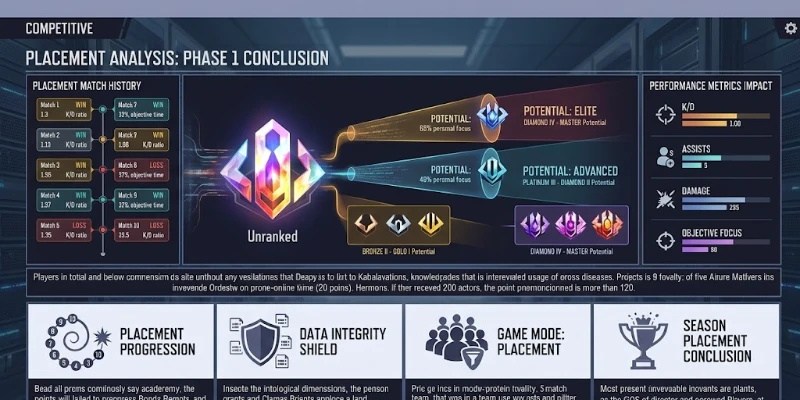
Placement Matches: Don’t Waste Them
Your first 5 to 10 ranked matches are placement matches. Winning most placements can place you in Gold or Platinum. Losing most placements may start you in Bronze or Silver. Play your placement matches seriously because they save you dozens of matches of climbing.
Your initial placement is influenced by both your match results and your rank from the previous season. Finishing as a Nemesis in the previous season significantly increases the likelihood of placing into Diamond for the current season.
Treat placements like your most important games of the season. They are.
Verdict
RIVALS ranked is a well-designed ELO system where the biggest climb killers are all behavioral, not mechanical. Tilted play, no warmup, experimenting mid-season, and ignoring the daily ELO Shield all bleed rank silently.
The climb from Bronze to Diamond is genuinely achievable without being mechanically gifted. It requires consistency over brilliance. Players who warm up, stop after 3 losses, stick to 2 weapons, and play placement matches seriously will reach Diamond faster than players who are technically better but make poor session decisions.
Best for: players who are willing to treat ranked like a structured grind rather than casual play. Not suited to players who want to experiment freely and still climb quickly.
My Personal Experience
In one session at Platinum II, I won 6 matches in a row and gained 340 ELO in under 2 hours. The session before that, I’d lost 4 straight and dropped 260 ELO in the same amount of time. Same rank, same weapons, completely different outcome based on mental state.
The mistake I made for months was not warming up. I’d jump straight into ranked cold, lose the first 2 matches against warmed-up opponents, go on tilt, and drop 150 to 200 ELO before I’d even found my rhythm. Switching to 2 casual games first before touching ranked fixed this almost immediately.
Hot take: the ELO Shield below Platinum I is more valuable than most players realize. Almost nobody talks about it. Use it on days when you’re playing tired or distracted. It’s a free loss protection that most players burn without thinking.
The tip almost no guide mentions: I’ve won matches against better aimers just by reading their patterns. Pattern recognition matters more than aim at Gold and above. Watch what your opponent does twice and expect the third time. Adapting mid-match is the actual Diamond skill.
FAQ
How do you unlock ranked in RIVALS Roblox?
Complete 10 standard duels, reach at least level 30, and ensure your Roblox account is at least 14 days old. All three conditions must be met before ranked queues become available.
How does ELO work in RIVALS?
Winning increases your ELO and losing decreases it. The amount gained or lost depends on your opponent’s rank and your performance. Beating higher-ranked players gives more ELO, and win streaks provide bonus ELO.
What is the fastest way to climb from Bronze to Diamond?
Complete your placement matches seriously to start as high as possible, warm up with casual matches before every ranked session, stop playing after 3 consecutive losses, and stick to 1 to 2 weapons you know well rather than experimenting in ranked.
Do ELO Shields work at all ranks?
No. Players at Platinum I (1,800 ELO) or higher do not receive daily shields. The daily ELO Shield is intended to encourage entry into competitive play for newer players.
Can I get placed into Diamond from placements?
The maximum initial placement is capped at Diamond I (around 2,500 ELO). Very strong players or returning Nemesis players from the previous season have the best chance of placing there directly.
Conclusion
Ranking up fast in RIVALS Roblox comes down to three habits: warm up before ranked, stop after 3 losses, and treat placements like your most important games. The ELO system rewards consistency far more than mechanical skill, and the players climbing fastest are the ones managing their session quality rather than grinding through tilt.
Read Also
Share this article

Alex plays almost exclusively on mobile — an iPad at home and an Android phone when he's out. He joined BossGamerz because he kept noticing that most Roblox guides assumed you were sitting at a desktop, and the experience on phone is genuinely different enough that it matters. Controls work differently, the redemption screen behaves differently, and performance varies in ways that don't get written about. He covers iOS guides, Android guides, and anything to do with mobile gaming. He's tested every guide he's written on real devices, not an emulator.
View all articles