
Free Fire MAX Tips: From Your First Match to Ranked Play
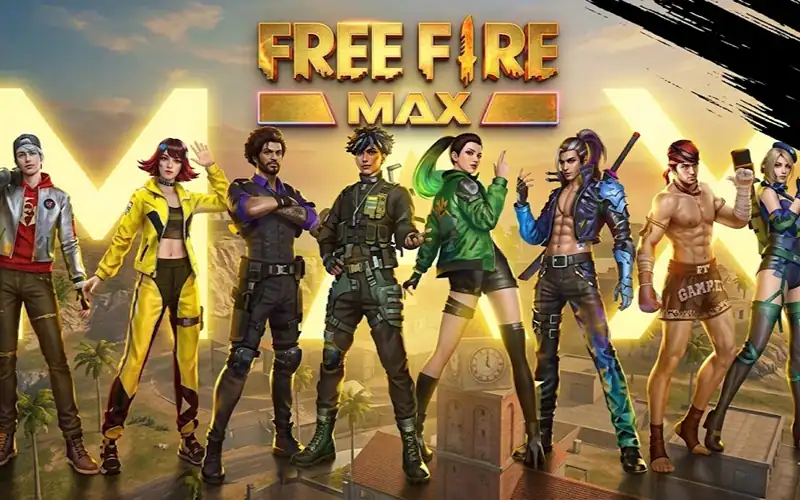
Getting better at Free Fire MAX takes three things. You need fine-tuned sensitivity settings. You also need smart positioning. You need to know when not to fight. Players who lock in these fundamentals climb ranks faster than those chasing kills with no game plan. This guide covers the exact mechanics from drag headshots to final-circle reads that separate average players from consistent top-three finishers.

The Settings That Actually Matter
Most beginners tweak sensitivity randomly and never revisit it. , the first mistake.
General sensitivity between 70-90 works well for mid-range devices. But here’s what most guides skip: your red dot scope sensitivity should be noticeably lower than your general sensitivity roughly 50-60. Mid-range fights demand micro-adjustments, and high scope sensitivity causes overshooting on those engagements.
Fire button placement is equally important. Move your fire button slightly higher than the default. This small change enables natural drag headshots without contorting your grip during fights.
Sensitivity Starting Point by Skill Level
| Setting | Beginner | Intermediate | Advanced |
|---|---|---|---|
| General | 60-70 | 75-85 | 85-100 |
| Red Dot | 45-55 | 50-60 | 55-65 |
| 2x Scope | 35-45 | 40-50 | 45-55 |
| 4x Scope | 25-35 | 30-40 | 35-45 |
Don’t copy pro settings directly. Pros operate at high sensitivity after years of muscle memory. Your goal is consistency, not raw speed adjust in 5-point increments only.
Map Intelligence: Where You Land Determines How Much You Learn
Beginners lose games before the first fight by choosing the wrong landing zone.
Hot drops: Clock Tower, Factory, Peak teach gun mechanics fast, but they’re awful for building game sense. You die before learning rotation timing, zone awareness, or late-game positioning. Land in mid-tier zones during your first 50 matches. Gather full gear, rotate early, and survive to the final ten circles. That repetition builds decision-making faster than hot-drop grinding.
Early rotation is an underused tool. Rotating before the first zone closes lets you choose your position rather than being forced into desperate repositioning under fire. When players consistently implement this, late-game survival rates climb because they’re not already compromised from a rushed rotation.
Sound is your free radar. Earphones reveal directional footsteps up to 30 meters away. Gunshots from 200-plus meters signal a fight worth tracking a third-party opportunity that opens once both squads are weakened.
How to Master the Drag Headshot: A Step-by-Step Plan
The drag headshot is the highest-value mechanical skill in Free Fire MAX. Here’s how to actually build it rather than just read about it.
Step 1: Understand the Mechanic
Pressing and dragging the fire button upward while shooting moves your aim upward in real time. The goal is a smooth drag from chest level to head level across a 3-4 shot burst. The most common failure: dragging too fast and overshooting the head entirely. Slow the motion down.
Step 2: Practice on Stationary Targets First
Training mode, 15-20 meter range. Fire one shot, drag up slowly, fire again. Don’t rush. Repeat until the motion is automatic not just accurate.
Step 3: Add Lateral Movement
Once stationary drag shots land consistently, practice while strafing left and right simultaneously. The combination is what makes this lethal in matches: you’re moving off their crosshair while pulling their aim to your head.
Step 4: Apply in Live Matches Gradually
Use it on isolated enemies first, never in chaotic multi-squad fights initially. Land it cleanly 20-plus times in controlled scenarios before applying it during squad rushes.
The Gloo Wall Mistake Almost Everyone Makes
Everyone carries Gloo Walls. Almost nobody deploys them effectively.
The core error is reactive placement, throwing walls only after taking damage. By then you’ve eaten 30–50 HP, the enemy has your position locked, and your wall placement is panicked. Proactive Gloo deployment is the real skill. When crossing open fields, drop a wall at the midpoint of your path before anyone shoots. You have committed cover if you’re spotted, instead of scrambling mid-sprint.
At airdrops, drop a wall around the loot box before opening it. That’s well-documented advice. Here’s what most guides miss: add a second wall perpendicular to the first. An L-shape provides 270-degree cover not just frontal protection from the obvious angle.
Weapon Selection: The Full Decision Matrix
| Weapon | Best Range | Recoil | Beginner-Friendly | Ranked Viability |
|---|---|---|---|---|
| MP40 | 0-20m | Very Low | Yes | High |
| M4A1 | 20-60m | Medium | Yes | Very High |
| AK47 | 20-50m | High | No | High |
| AWM | 100m+ | N/A | No | Very High |
| SPAS-12 | 0-15m | Low | Yes | Medium |
The MP40 plus M4A1 combination covers the widest engagement range with manageable recoil, the most forgiving loadout for players still building spray control.
Recoil management works like this: divide your magazine into thirds. Fire in 5-round bursts, pause 0.3 seconds, repeat. Full-auto spraying at range is the single most common reason players miss fights they should win outright.
Pro Tips: What Actually Keeps Players Stuck
From observing how players plateau at each skill tier, these patterns repeat:
At beginner level: Players treat every fight as mandatory. Skipping unfavorable fights outnumbered, low HP, bad positioning is a skill, not passivity. Forcing every engagement actively hurts survival rate more than any mechanical weakness.
At intermediate level: Players use techniques in isolation. Drag headshots without Gloo Wall support. Rushing without clearing sound cues first. The real skill is combining them: place a Gloo Wall to break line of sight, then rush the flank while opponents reposition behind it.
At advanced level: The trap is predictability. If you always peek from the right side, opponents anticipate it within seconds. Vary your peek angle and timing. Anyone who’s fought you for 20 seconds has started reading your patterns disrupt them deliberately.
Character Combinations Worth Running
| Character Combo | Playstyle | Key Benefit |
|---|---|---|
| Alok + K | Sustain | Passive healing plus EP conversion for long fights |
| Chrono + Jota | Aggressive | Shield burst plus HP recovery on kills |
| Skyler + K | Offensive | Gloo Wall destruction plus HP sustain |
Alok’s healing aura paired with K’s EP conversion creates a sustain setup that outperforms pure offensive builds in late-game scenarios where fights drag on. For aggressive players, Chrono’s shield remains effective when timing and positioning are correct. If you want to track any active character unlock codes or limited-time reward codes, the Free Fire MAX game codes finder keeps an updated list worth bookmarking.
Final Circle: The Part Nobody Talks About
High ground is repeated everywhere. Here’s the part that isn’t.
In the final three circles, information beats kills. Players who reach top-three usually survive by staying passive, letting squads eliminate each other, then engaging only when positional advantage is overwhelming. An enemy already taking fire from another squad is almost always worth engaging their HP is split, attention is divided, and they can’t fully counter-push.
Use grenades to deny cover, not just deal damage. A grenade at a camper’s Gloo Wall forces movement and reveals their new position. That information is often worth more than the actual damage dealt.
FAQ
How do you get better at Free Fire MAX? Focus on one mechanic at a time. Sensitivity, drag headshots, or Gloo Wall placement rather than trying to fix everything at once. Deliberate practice on a single skill across five matches compounds faster than vague improvement grinding.
What are the best sensitivity settings for Free Fire MAX? Start with general sensitivity at 70-80 and red dot at 50-60. Test in training mode for 15 minutes before applying in matches. Adjust only in 5-point increments, never large jumps.
Which characters are best for beginners in Free Fire MAX? Alok is the most consistently beginner-friendly character passive healing and movement bonuses apply regardless of playstyle. K becomes more valuable once you understand HP management at the intermediate level.
How do you do a drag headshot in Free Fire MAX? Press and slowly drag the fire button upward during a burst. Practice on stationary targets in training mode before using it in live games. The most common error is dragging too fast and overshooting.
How do you control recoil in Free Fire MAX? Use 4-5 round burst fire with a brief pause between bursts. Crouching behind cover reduces recoil noticeably when stationary. Avoid full-auto fire at any range beyond 25 meters.
What’s the best Free Fire MAX final circle strategy? Position before the final circle closes, not during it. Take elevated cover early and only engage enemies who are already compromised by another fight. Survival priority over kill chasing every time.
What weapons should beginners use in Free Fire MAX? MP40 for close range and M4A1 for medium range. Both have manageable recoil, widely available ammo, and stay viable deep into ranked modes without requiring advanced spray control.
Your Next Steps Right Now
Apply the sensitivity table above and spend 15 minutes in training mode before your next session. Don’t adjust settings again for at least 20 games, consistency beats constant optimization.
Then work on one mechanic per week: Gloo Wall deployment this week, drag headshot mechanics the next. Players who isolate their improvement accelerate faster than those trying to fix everything in a single session.
Read Also
Share this article

Ryan has been playing Roblox since 2017. He started keeping a personal spreadsheet of codes that actually worked after getting burned one too many times by lists that hadn't been updated in weeks. That spreadsheet turned into BossGamerz. He still plays Blox Fruits and King Legacy regularly — not to write about them, but because he genuinely enjoys them. He handles what gets published and what doesn't. If a code list goes up on this site, he's either tested it himself or someone on the team has done it in front of him.
View all articles
No comments yet
Be the first to start the conversation!